Pages

Monday, May 9, 2011

All Your Database Are Belong to Me

We had a very informative class on how to search for and find funding. The final class of the final course of my Preparing Future Faculty career. :)

I decided to take my notes as a blog post instead of in a notebook.

Prospectus?

Consider Timing and Deadlines, just like applying for schools, there are a lot of deadlines so it is best to map them out.

Consider both Public and Private Funding

Review University Proceedures


School Resources
  1. Office of Research (lots of good stuff here)
  2. Office of Sponsored Programs
  3. Center for Clinical and Translational Research
  4. Corporate and Foundations Relations Office

Electronic Search Tools

SPIN (Frowned upon and difficult to find: VCU Mainpage>Research>VCUeRA>VCUeRA portal>SPIN Contact Jessica if it doesn't work)

COS (Used to mean Community of Science, now it's just COS. Bigger than SPIN. VCU Libraries>Database A-Z>C>COS)

Grants.Gov is a monster site that has everything, but it is most useful if you already know what you're looking for and where it is.

Science Grants and Funding

National Institutes of Heath (NIH)

National Science Foundation (NSF)

VCU Sources


Funding Resources

Texas A&M University Graduate Fellowships and Dissertation Grant resources

Duke University Funding Opportunities Database

Michigan State University

Cornell University Fellowship Database


More expensive Database:

Foundation Center Training Courses

It is good at picking up funders that other sources don't find.


When beginning your search
  • Research the keywords (keywords can change over time, patterns)
  • Think outside the box (e.g. Obesity research using PDAs; couldn't find anything under obesity keyword, but found many opportunities by searching for PDAs)
  • Expand your area of study (Look outside of engineering)
  • Look at previous research and find how they were funded
  • Get HELP! Monroe Park: Ariana Bracalente, 828-1230 (abracalente@vcu.edu)
  • MCV Campus Pam Dillon and Jessica Venable (jcvenable@vcu.edu)

Most of these options allow you to create alerts and that is what you should do. Link them to a reader or at a minimum get them emailed to you.

Monday, January 17, 2011

New Year, and we're trying to Publish!


Hello Everyone again,

I am in the midst of it here. I've been learning Fortran and writing some code to do Lagrangian Particle tracking. (Just means I am looking at individual particles instead of at all of 'em at the same time).

I am still constructing my experimental setup to validate the numerical analysis with physical deposition results. I am at the stage of getting a reticle (a piece of glass with lines etched on it that allows me to count particles within a grid)

I am also starting to write a paper with Dr. Longest. I am doing a literature review of the Alveolar region. That means... I have a lot to read!

Peace and more as it comes,

Landon


Thursday, December 2, 2010

Church Hill tutoring sessions lift up neighborhood | Richmond Times-Dispatch

Many of my friends are involved in this Academy. How encouraging it is to see this from VCU. Thank you Richmond Times Dispatch for writing this story as well!

Church Hill tutoring sessions lift up neighborhood | Richmond Times-Dispatch

Thursday, September 16, 2010

Microlectures via Podcasting


The VCU Center for Teaching Excellency recently released their monthly publication for the benefit of future faculty. One of the things I wanted to bring to light, remember and share with others was this background on and applications of Podcasting in teaching.

From that article Dr. Reis from Stanford explains:

Podcasts do not need to contain the full information from a 60-to-90 minute lecture. San Juan College is experimenting with "microlectures," a traditional lecture in which key concepts and themes are condensed down to a one to three minute segment (Shieh, 2009, p. 1). Some faculty find that a three-to-five minute audio clip is an optimum podcast length, similar to the length of a song students listen to on the radio (Walsh, 2004). Because microlectures are limited in the amount of content they can convey, students are required to complete their learning with additional readings and assignments. Pedagogical limitations include situations where a prolonged discussion or explanation is necessary, such as when solving mathematical problems, extending English literature discussions, and explaining complicated processes.


But how intriguing are the possibilities that result from all of the creative uses of podcasting as a learning tool? It reminds me of a section of Grad 602: Teaching and Technology in Higher Education, which focused on learning through generating content. If we can help students to create content, not only will they be learning as they do it, but they will be writing the "textbooks" that the students who follow after them will use. By bringing the textbook authorship back to the people who are learning, you will produce a more relevant and discernible learning aid.

Wednesday, August 25, 2010

Landon's Lab Lets Loose

So experimental work has been slow moving, but we have fixed our heater problem, found and fixed the AC adapter for our flowmeter, ordered additional rotameters, determined the correct dilution for our aerosol, used a fluorescent microscope to view our geometry and properly cut our tubing to equal lengths for our Lung geometry. Enjoy. Dr. Oldham is coming again tomorrow and I hope to have a filter paper with particles on it to show him! Early day tomorrow!

-Landon

Monday, August 9, 2010

Valedictorian on Education

Swiftkick reposted Erica Goldson's graduation speech as Valedictorian of her high school class.

Her energy is refreshing and she is able to verbalize glaring problems (not new problems) with our system of education.

Thursday, July 15, 2010

Progress!


A new post, A new post. Yes, progress to the process. Documented above. I will make some more posts about the work that will happen in the next week:

-Presentation of progress to Dean Jamison on Wednesday

-Generation of the first aerosol, hopefully before then!

More to come!

Wednesday, April 21, 2010

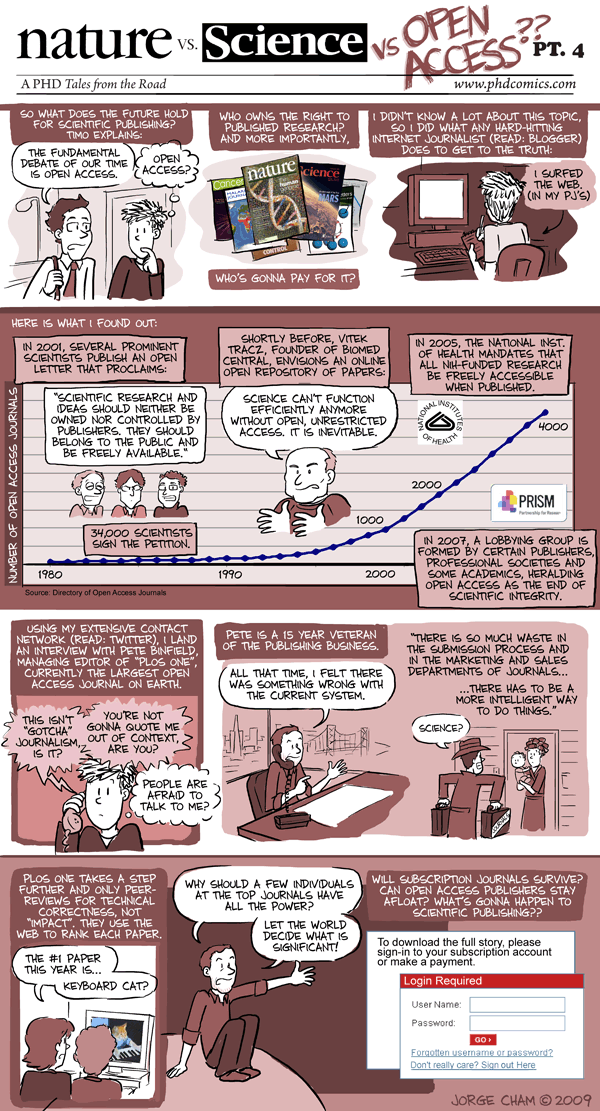
Open Access and Publishing


One of the interesting topics discussed in my Preparing Future Faculty class has been the change in ownership as well as the authenticity of published journals vs online "publishing". It is interesting to view authorship through the scope of scientific progress. The possibility is that there could be literally no cost to publishing science. This opens the door to all scientists and breaks down the barrier of formal education, but when that happens, fear walks in and proclaims that science itself will not be trustworthy.

It also raises an interesting question of where the funding for research comes from and where it will come from. This has been one of the motivating factors behind my blog posting of my experimental setup. So far my CFD work has been traditional "closed" science, while my experimental work has been "open" science. I am considering ways of making the CFD work more open, but my personal question becomes, "If I make posts about how to really do the work I am doing and someone learns it well enough to do it, what is left for me to do?"

Peace,

Landon

Friday, April 16, 2010

Whorls and Fleas

This morning, I was speaking with my friend who conducts himself in the scientific process within the Life Sciences building at VCU. Over breakfast we discussed the difference between Analytical, Empirical, and Numerical Analysis. These distinctions may not be something that are on your radar, but they play an important role in the drama/comedy of my life and work.

Please allow me to set the stage...

Analytical Sciences are formed out of Philosophic principals applied to societal needs. An interesting side note, Plato can be seen as a good example of the analytical scientist, but he was following in the footsteps of Socrates the "politician" (Good General Greek History). Plato created thought experiments, but he never tested them because of his belief that experimentation was never necessary. Similar to Einstein's thought experiments on quantum study because they were unable to do experimental work on that scale at the time (not by choice).

Similar to Plato stepping away from politics, Aristotle stepped away from unverified thought. Aristotle changed the way we see science by applying simple logic and keeping track of (empirical science). Statements are made by logically following physical observations and isolating the system you are observing to discover what might cause the change. This progressed for a while, but we'll fast forward a couple thousand years or so and settle on Galileo and the easy target of Sir Issac Newton to explore more of what we mean about the merging of empirical and analytical.

Mr. Issac's well known laws of motion (1687) are sentences that describe the motions of objects and relate Galileo's work on celestial bodies to objects we live in contact with. Every word is deliberate and has a precise meaning. These are analytical relationships, but the are confirmed with experimental success. Newton however, also offered "numerical" possibilities in his solution of problems which could not be solved "analytically".

Considering lastly the subject you may be least familiar with, Numerical Anaylsis. Leonard Euleris a good subject to discuss for the application of analytical and empirical thought to the pursuit of an answer, a result, a number. While this branch has been around for a very long time, it is the implementation of the personal computer that allows for a great number of calculations to be followed through quickly and reliably. Prior to the computer iterations would be computed by hand and could take months to complete. As an interesting anecdote, in 1910 Lewis Fry Richardson ran numerical analysis to predict the weather at 1 pm based on the weather at 7 am. Three months later, his results were incorrect, but his process was mostly correct and the amount of work it took to do by hand is astonishing. "He calculated himself that it would need 60,000 people involved in the calculations in order to have the prediction of tomorrow's weather before the weather actually arrived.(ref)"

The process of numerical analysis in terms of my research can be seen simply as using things that people like Euler came up with and Richardson used to simplify complex problems. These complicated problems are Differential equations, which simply means that things that we observe are changing with respect to the change in a quantity (or two, or three or more). These equations are "coupled" meaning that you have to solve them all at the same time. So numerical analysis is taking a small problem that is very complicated and translating it into a simple problem that is very large.

So what?

Ok, so the point is that there are many people who have undergone the tasks of science and I am studying in this line of scientists. I resonate with little bits of each biography and I am beginning to see why it is a good thing that I am studying as I am at VCU. I am forced now to learn to be comfortable with each side of discovery. My advisor excelled in analytical thought during his undergraduate and graduate education and has applied that to Numerical Analysis to become one of the top in his field. He has worked with Dr. Mike Oldham, who is similar and different in various areas of life. His passion for science is similar, but his passion is in the mechanics of the lab, not the numerics of the problem. He walked into the organized lab and just destroyed the cleanliness, but turned it into a real lab. He undid the assembling I had wondered about and guess and connected all the parts in a way that took up a small amount of space and will actually work. It is the kind of thing that comes with ~30 years experience, he's a good person to know.

Dr. Longest and Dr. Oldham both look at me like I'm doing something they are sure glad they don't have to. Both of them have great respect for the other's work, but are not comfortable doing it. Their goal for me is to be able to generate data from computer studies, validate it with experiments. This allows them to pontificate analytical relationships using these correlations. The interesting part for me is the application to the social and political. The application of my project to people and the impact it can have. But I am learning about the other parts because they are necessary to be well rounded.

Till Then, Poetry. - Landon
Big fleas have little fleas

Upon their backs to bite 'em,

And little fleas have lesser fleas

And so, ad infinitum.

-- Jonathan Swift

Big whorls have little whorls

That feed on their velocity,

And little whorls have lesser whorls

And so on to viscosity.

-- Lewis F. Richardson

Thursday, April 15, 2010

She may not look like much, but she's got it where it counts, kid.

Dr Oldham visited to round out the first week of empiricism. He walked in lab proud of the equipment and confident in the ability of the devices to produce useful data.

Many hours later he walked out of the lab leaving a parts list for materials needed to finish setting up the lab so we can begin to gather some data. The list comes from a range of suppliers. From the auto store, to McMaster-Carr we will be placing an order next week, and then I will be returning to numerical studies while we wait for the parts to arrive.

I may document some of the more interesting parts of the numerical work, but there is much less attention grabbing items on computer screens than in an experimental lab, so we'll just see how it goes.

Till again-

Landon

Wednesday, April 14, 2010

Day three, a visit from Ben Kenobi


With Ben Spence's help we have setup the lab and I am beginning to understand what some of the machines do in it. But this is all very important for us to have it like this because today we'll have a visitor. A wise sage, Dr. Mike Oldham, is coming to give us guidance in becoming experimentalists.


We intend to duplicate an experimental setup that he used in 1997. This will be to get us experience with the devices, but then we will branch out and insert our own devices into the experimental design.

Here's to a week on the empirical side of science.


Cheers,

Landon

Tuesday, April 13, 2010

Day 2 Engineering Experiment

From Ordinary Radical Engineering

With yesterday spent organizing, today is to be spent assembling something to resemble an experiment and help generate questions for the expert, Dr. Mike Oldham. He is coming on Wednesday to answer questions I have and see how we have things setup.

From Ordinary Radical Engineering

With that, I'm off!

Peace,

Landon

Monday, April 12, 2010

What does a PhD in Mechanical Engineering look like at VCU

I'm transitioning from the pursuit of my Bachelor of Science in Engineering to my new pursuit of a PhD in Mechanical Engineering at VCU. I've been writing about the class I have been taking that is preparing me for the teaching and administrative side of obtaining a PhD. This is but one side of a three sided program. In addition to teaching and fulfilling administrative tasks I will also be conducting research.

Without further ado, I will begin my documentation of the experimental side of my research. I work for Dr. P Worth Longest in Mechanical Engineering. For years Dr. Longest has been conducting research in aerosols science and particle deposition . Well, as I am starting my work with him and am going to be here for a while, Dr Longest would like to begin an experimental side of his research to validate previous correlations and create new ones for future works. The difference between computational and experimental sciences is gigantic, but our plan is for me to be able to understand both and create case studies that spring from physical reality and can be validated by systematic numerical analyses.

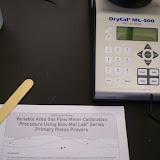
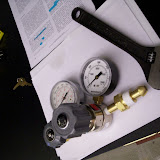
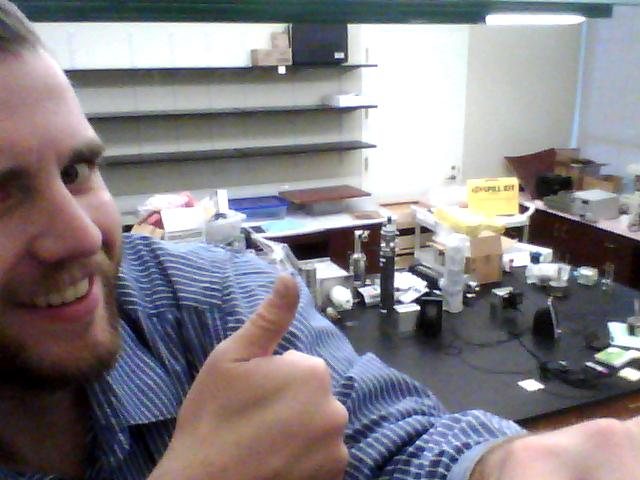
Before this I have to wash the countertops and the shelves and learn what all this equipment does. Similar to a cooking blog I am hoping to add updates and include pictures. I will try to remember to bring in my camera and take nicer pictures, but to begin I will just post the overall look of the lab.


Peace,

Landon

Monday, March 29, 2010

Net Gen- The Catering Gen


Net Gen learners are young and they've been raised on computers. Because they were raised inside of technology, they've broken many conceptions of how long and how difficult it is to learn a process. Generation X can take classes and work on keeping up to date with technology, but at some point they have settled into "what works." The Net Gen doesn't know what works, but they have access to everything that might work. Through this access the Net Gen is able to explore possibilities in a fresh way and use whatever software or device is most efficient for the task.

In a video game you being with no idea of how to play. You know how to use the controller, but level by level you learn new rules and button combinations that are useful in new and different situations presented to you in a logical way that leads you to quickly master a game. It all happens very quickly. Within two hours of playing a game you can become familiar with it and the more familiar you are with it, the more you enjoy it.

My problem is then with applying this video game mentality to real life. Net Gen students raised on technology can accelerate through many of the normal road blocks of education, and can learn the software needed to solve a problem more efficiently than those who are teaching. But the students need the problems laid out like a video game. Setting little goals along the way to gain minor skills until a point is reached where the student is comfortable with the game and can explore the harder levels.

I don't believe that there is true creativity within the gaming world. The creativity is in the side dishes served with the video game, but not contained within it. You can choose your name, you can choose who you play with, what you play and when you play. But once you are playing you are governed by a long list of rules that does not allow for much room to create. This is my problem with linking it to school, academia, research, or learning. Net Gen learners within the modern constraints are not allowed the room to explore and apply understanding to problems in their neighborhood, state, or country. Without this understanding of how actions change surroundings, everything becomes theoretical and one sided.

The net gen learners have always been catered to and are used to being told what to do, how to do it, why to do it, and when it needs to be done. What happens when the directives are not so clearly laid out?

Thursday, March 4, 2010

Lesson Planning and Course Design Considerations (Birth of an Idea)


Looking through the resources provided we find plenty of opinions, which is where an effective and unexperienced teacher would start.

Students reveal their understanding most effectively when they are provided with complex, authentic opportunities to explain, interpret, apply, shift perspective, empathize, and self-assess. When applied to complex tasks, these "six facets" provide a conceptual lens through which teachers can better assess student understanding.

Teachers, schools, and districts benefit by "working smarter" through the collaborative design, sharing, and peer review of units of study.

In general, a helpful way to design a course is to proceed through the following phases:

1) Identify desired results— GOALS


So wanting this application what would this look like at VCU? How can we get started in this and do instead of theorize? What about co-teaching an honors module sponsored by the preparing future faculty program and the Engineering Graduate school? How does an engineering professor get his or her initial exposure to this teaching? The Honors College appears to be a reasonable avenue for

Application to teach an honors course/module

Thank you for your interest in teaching a course or module with the Honors College.

  1. You will need the following information to complete the application:
    • A description of the course or module.
    • The course or module syllabus and bibliography.
    • Your time and day preferences.
    • Your curriculum vitae (CV).

The next collection of links ( 1 2 3 ) all speak of the benefits of building a teaching portfolio and provide examples of how to do that.

Portfolios obviously need to be filled with experience, just as CV's must be filled with actual experiences.


Friday, February 19, 2010

And The Dream goes On

Speaking of college students, Martin Luther King Jr wrote:

Most of the "brethren" think that education should equip them with the proper instruments of exploitation so that they can forever trample over the masses. Still others think that education should furnish them with noble ends rather than means to an end.

And through the rest of The Purpose of Education, which Dr. King wrote to Morehouse College in 1948, he concludes:

If we are not careful, our colleges will produce a group of close-minded, unscientific, illogical propagandists, consumed with immoral acts. Be careful, "brethren!" Be careful, teachers!

The theme of my blog indeed seems to be social reform, and it is hard to speak of this change and not refer to Dr. King. My previous entry had a few responses that prompted me to a few questions.

So my questions are: What are we doing to ensure that we are providing the education that we are responsible to provide? Not simply enough to not get fired or bad marks, but are we living up to the moral standard that a teacher should live up to?

How does this education of morality exist and effect our science classes? What is the role of morality and social consciousness in Engineering? (I am not satisfied with the idea that the Engineer needs to have only enough morality to not deliberately choose a bolt that is too small or weak when designing a bridge) As a highly educated individual what is my responsibility to my community and to my brothers and sisters?

Thursday, February 18, 2010

Formative Years...

A new week and a new assignment for the preparing future faculty class. Reading over the Concept of Formative Assessment I am initially intrigued as we open the box...

...assessment encompasses teacher observation, classroom discussion, and analysis of student work, including homework and tests. Assessments become formative when the information is used to adapt teaching and learning to meet student needs.

...Secondly...

students who understand the learning objectives and assessment criteria and have opportunities to reflect on their work show greater improvement than those who do not

I have always approached school as a student with the mindset of trying to figure out what the professor wanted us to learn. If I can understand her motivations and why she is asking certain questions, I can then better study what is important within the subject.

Black and William recommend that teachers use formative assessment to better gauge the learning taking place in a classroom and they have a list of possible ways for teachers to gather this information.

* Invite students to discuss their thinking about a question or topic in pairs or small groups, then ask a representative to share the thinking with the larger group (sometimes called think-pair-share).

* Present several possible answers to a question, then ask students to vote on them.

* Ask all students to write down an answer, then read a selected few out loud.

Teachers might also assess students' understanding in the following ways:

* Have students write their understanding of vocabulary or concepts before and after instruction.

* Ask students to summarize the main ideas they've taken away from a lecture, discussion, or assigned reading.

* Have students complete a few problems or questions at the end of instruction and check answers.

* Interview students individually or in groups about their thinking as they solve problems.

* Assign brief, in-class writing assignments (e.g., "Why is this person or event representative of this time period in history?)

The interesting part is that inside this assessment, our students also gain insight into their learning and the learning of their peers. So if students have a better understanding of if they are ahead or behind they will be able to gauge their efforts better and are provided a better chance to learn.

In addition to these classroom techniques, tests and homework can be used formatively if teachers analyze where students are in their learning and provide specific, focused feedback regarding performance and ways to improve it. Black and Wiliam (1998b) make the following recommendations:

* Frequent short tests are better than infrequent long ones.

* New learning should be tested within about a week of first exposure.


It continues to provide links to resources for teachers who seek to introduce Formative Assessment into their curriculum. Most of the research cited in this article is done in high school, but they claim it can be extended to higher learning and general learning.

Having never taught a full class on my own, I want to start keeping a list of things I could try if things start going awry. The Vanderbilt Center for Teaching provides a list of a few possibilities of classroom assessment techniques,

  • The Minute Paper tests how students are gaining knowledge, or not. The instructor ends class by asking students to write a brief response to the following questions: "What was the most important thing you learned during this class?" and "What important question remains unanswered?"

  • The Muddiest Point is one of the simplest CATs to help assess where students are having difficulties. The technique consists of asking students to jot down a quick response to one question: "What was the muddiest point in [the lecture, discussion, homework assignment, film, etc.]?" The term “muddiest” means “most unclear” or “most confusing.”

  • The What’s the Principle? CAT is useful in courses requiring problem-solving. After students figure out what type of problem they are dealing with, they often must decide what principle(s) to apply in order to solve the problem. This CAT provides students with a few problems and asks them to state the principle that best applies to each problem.

  • Defining Features Matrix: Prepare a handout with a matrix of three columns and several rows. At the top of the first two columns, list two distinct concepts that have potentially confusing similarities (e.g. hurricanes vs. tornados, Picasso vs. Matisse). In the third column, list the important characteristics of both concepts in no particular order. Give your students the handout and have them use the matrix to identify which characteristics belong to each of the two concepts. Collect their responses, and you’ll quickly find out which characteristics are giving your students the most trouble.


Similarly, FLAG offers a wealth of modules for learning assessment.

WHAT ARE WEEKLY REPORTS?
Weekly Reports are papers written by students each week, in which they address 3 questions:

  • What did I learn this week?
  • What questions remain unclear?, and
  • What questions would you ask your students if you were the professor to find out if they understood the material?

The difficult aspect of doing this is just the investment required by the students. If it is not valuable to the student and they don't invest in it, it won't do them any good. :(

But now we come to the end of our Post. We come to the end of our walk through introspective language. But we are American, so let's end it with a BANG!

What is the difference between teaching and talking?

When you Teach, you learn. When you listen you learn. But it is hard to listen when you're talking.

(2) What can you do in the classroom that you can't do anywhere else?

Either the answer is nothing, or I don't understand the question.

I wonder if that's radical.

-Engineer

Friday, February 12, 2010

Bicycle Apprenticeship


Independent bamboo frame builders are going to be speaking at the upcoming North American Handmade Bicycle Show (NAHBS). This concept of giving fish, teaching fish, and the expansions on it are good to hear because we can understand them in this analogy. Similarly we find:

“We’ve all heard the saying , “Give someone a fish and they’ll eat for a day, but teach them to fish and they’ll eat for the rest of their life.” But our friend John Perkins challenges us to go farther. He say, “The problem is that nobody is asking who owns the pond or who polluted it.”
Shane Claiborne - The Irresistable Revolution
Being able to take information and construction techniques that utilize local materials and skillsets is one of my aspirations as an educator, but I do not think that any of this can be separated from the political backdrop of our world. To this extent the small act of teaching someone to build a bicycle from their surroundings is one motivated by goodwill and genuine love for another. I see that as Hope.

The aftermath of nonviolence is the creation of the beloved community, so that when the battle is over, a new relationship comes into being between the oppressed and the oppressor.
-Dr. Martin Luther King Jr

The reason I want to be an educator is to help those who struggle with the basic problems of warmth, food, and shelter. The reason I am pursuing training to be a teacher is to have more to offer people in need, meanwhile wrestling the basic problems of a privileged life in a privileged environment. My inclination toward reformation comes not only from my education as a mechanical engineer, but from the rest of my life as well. It comes from the people I meet, from the eyes and hearts of the lost and lonely.

Tuesday, February 9, 2010

Undergraduate Educators

A general blog to be taken as blog is short for (weblog). So this is more of a log of what I think I learned from this paper, written as I read it...

If beginning teachers are to be successful, they must wrestle simultaneously with issues of pedagogical content (or knowledge) as well as general pedagogy (or generic teaching principles)


There is a list of features of what we want to teach. I'm not sure how this is related to comprehension. In those features are contained,

  • To teach students to believe and respect others, to contribute to the well-being of their community
  • To give students the opportunity to learn how to inquire and discover new information
I think that these are great ideals, but I would love to hear some ways that we could implement this kind of program in a public school. This is not me being cynical or even skeptical, just feeling like I haven't seen these points spoken of often. These both feel like implicit lessons in our american university setting.

Following the list of interesting points to consider for a teacher (comprehension, transformation, instruction, and evaluation is a statement of logical teaching that falls under reflection:

All teachers must learn to observe outcomes and determine the reasons for success or failure
And this is where we claim no gap between "squishy-hard" sciences. This is teaching, and it is based in reality. If we see something has failed, we try to figure out why it did and we only reenact it in our head. We don't repeat a failed method without good reason.


Moving to our second reading we now consider the shift of paradigms. We wish to observe a shift in our educational system from providing instruction to producing learning. Concerning the differences in how we may rate and quantify our progress we see:
We are so wedded to a definition of quality based on resources that we find it extremely difficult to deal with the results of our work, namely student learning.
I do have a worry about the learning production paradigm that is contained within the next statement:

It supports any learning method and structure that works, where "works" is defined in terms of learning outcomes, not as the degree of conformity to an ideal classroom archetype.

In fact, the Learning Paradigm requires a constant search for new structures and methods that work better for student learning and success, and expects even these to be redesigned continually and to evolve over time.
My worry is that in our attempt to redefine education we will lose some of the qualities that allow for teachers who are less capable to maintain classes. We have introduced a lot of ambiguity into our system by producing learning.. If we talk about it too much we will stray into arbitrary theoretical nonsense. In a sense, we need to be ready to adapt and change our methods, but we must also be willing to choose a method, fail at it, and choose again. We will not be able to provide a structure for some who need it if the class appears to be too floppy or without any structure.

However, I find it hard to argue with the logic in the motivation of our need for change:

"Fractionated instruction maximizes forgetting, inattention, and passivity. Both children and adults acquire knowledge from active participation in holistic, complex, meaningful environments organized around long-term goals. Today's school programs could hardly have been better designed to prevent a child's natural learning system from operating."
I finally come to the point, nearing the end of the article when I find that I need a direction of what needs to happen as opposed to what is wrong with everything. I am pleased to find a clear direction:

We need to work to have state legislatures change the funding formulas of public colleges and universities to give institutions the latitude and incentives to develop new structures for learning.
In reading this article I find that same push of governmental change. But there is still a fine balance between change from the top and the bottom. We need to begin by speaking the language to each other. Wondering what our university can look like, but also speaking the current language of failure to our legislative branch. This feels like a complete and refined thought, I like it.

Monday, February 8, 2010

Engineering Social Reform

Why?
Your people will rebuild the ancient ruins and will raise up the age-old foundations; you will be called Repairer of Broken Walls, Restorer of Streets with Dwellings. - The Bible, NIV, Isaiah 58:12

In the summer after my last semester of classes as an undergraduate engineer I took a writing class that allowed me the opportunity to reflect on the education I had just received. I have attached a paragraph as well as the linked to the entire document below. During my teaching and technology class I was asked what an engineer thinks (or more why an engineer thinks) about social reform (see previous post), and I think this will shed a little bit of the light on the matter.

There is visible a great downfall to this whole progression of business. That downfall is that the upward march of progress in the global market appears to be to the edge of an unsure cliff. We want to compare what it is that we are hoping to accomplish versus what we are actually accomplishing. Therefore we need to stop teaching our students facts and formulas while withholding the dynamic interactions and conflicts within their very education. Can you train a student to solve a local problem within the frame of the bigger global picture by instructing her in how to solve a problem without a bigger picture? This compartmentalization of education has lead to a disenfranchised generation by causing a lack of coherence and purpose in our curriculum.

An Engineering Curriculum